Number Games
How to Win Lotto? Odds, Costs, and Math
Wiktoria Nowak
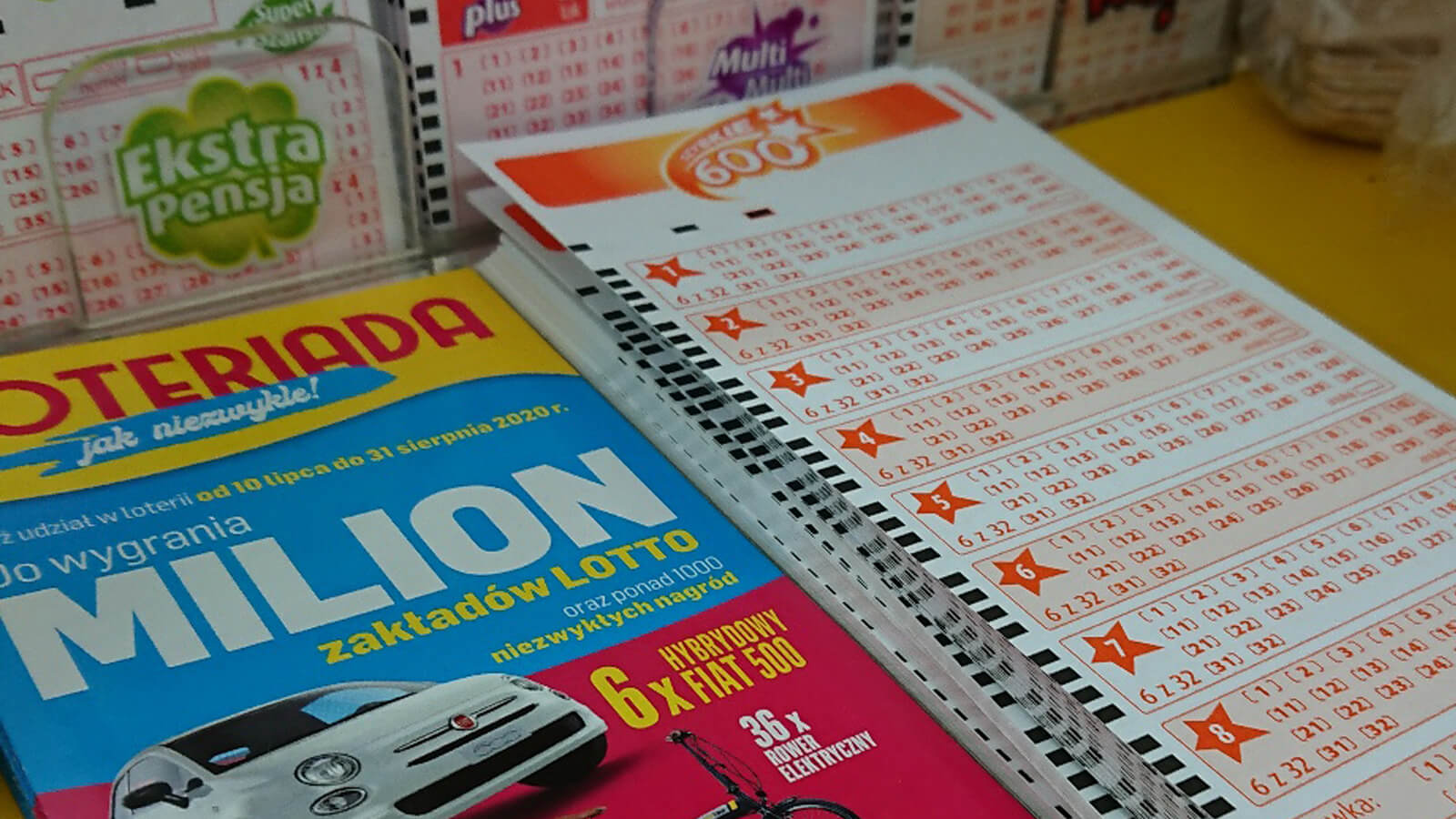
There is no way to increase the chance of hitting the jackpot in Lotto other than paying for more bets. The probability is 1 in 13,983,816 for every set of six numbers and is identical regardless of whether you pick birth dates, overdue numbers, or a generator's output. Draws are independent events — the ball in the drum does not remember the previous Tuesday.
What Are the Odds of Hitting the Jackpot in Lotto
Lotto involves picking 6 numbers from 49. The number of all possible combinations is given by the binomial coefficient: 49 choose 6, which gives 13,983,816 combinations. The order of the draw does not matter, so each of these sets is equally likely. One bet is one combination out of nearly fourteen million.
If someone filled out one bet every day, on average they would need to do so for about 38,000 years to hit the jackpot once. This is not a schedule or a guarantee — just an expected value that shows the scale of the phenomenon. Two bets double the chance, but doubling a microscopic quantity still gives a microscopic quantity.
Odds for Individual Prize Tiers
| Matches | Number of Combinations | Odds per Bet |
|---|---|---|
| 6 of 6 | 1 | 1 : 13,983,816 |
| 5 of 6 | 258 | 1 : 54,201 |
| 4 of 6 | 13,545 | 1 : 1,032 |
| 3 of 6 | 246,820 | 1 : 57 |
The numbers in the middle column are the product of two binomial coefficients: the number of ways to pick the matched numbers from the six drawn, times the number of ways to pick the rest from the remaining forty-three. The sum of all rows plus 6,096,454 combinations with no match at all gives back 13,983,816. The history of each number's occurrences is shown by Lotto statistics.
Why Draw Statistics Don't Help with Picking Numbers
The belief that an overdue number “must finally come up” is a classic gambler's fallacy. The drawing drum keeps no ledger. The fact that number 17 came up in the previous draw, or hasn't come up in fifty draws, does not affect the next draw in any measurable way.
Frequency tables and heat maps have cognitive value — they show what the game's history looked like. Over several thousand draws, natural variance means some numbers came up dozens of times more often than others. This is not a signal, just noise that statistics expect in any sufficiently long random sequence. The distribution of occurrences over time is shown by Lotto heat maps.
The only measurable effect of number choice concerns not the probability, but the split of the prize pool. Sets popular among players — birth dates, meaning numbers from 1 to 31, sequences like 1-2-3-4-5-6, regular patterns on the ticket — if they hit, tend to be shared among more people. Choosing numbers that are bet on less often doesn't change the probability by a fraction of a percent, but it can increase the amount per winner.
How Much Would It Cost to Buy Every Combination
The most commonly cited “sure method” is paying for all 13,983,816 combinations. Arithmetically, this guarantees a jackpot, but the math ends up in the red before we're even halfway there.
The cost of such an operation is the product of nearly fourteen million bets and the current price of a bet — an amount in the tens of millions of zlotys. The Totalizator Sportowy bet price list changed on August 18, 2026, so the rate should be checked with the operator before doing any calculations. A prize above the threshold of 2,280 PLN is subject to tax at a rate of 15 procent on the FULL amount, not just the excess over the threshold; the rate increased from 10 percent on January 1, 2026. The result for a specific amount can be calculated with the prize tax calculator.
There's also the risk of pool splitting: during record jackpots, significantly more people play, so the chance that someone else hits the same set increases precisely when the pool looks most attractive. Then there's the logistics — filling out and paying for fourteen million bets in the window between draws would require hundreds of points of sale working in parallel, and it couldn't be done unnoticed.
Does a Shortened System Increase Your Chances
A shortened system is a set of several or a dozen or so bets arranged so that, given a certain number of matches within a chosen pool of numbers, a specific lower-tier prize is guaranteed. It does not change the chance of hitting the jackpot beyond what follows from the number of bets paid for — it only organizes how they're arranged and increases the predictability of small wins. It costs as much as all the bets it contains.
The difference between a full system and a shortened one comes down to how many combinations from the chosen pool you actually pay for. A full system covers all of them, a shortened one covers a selected part with a guarantee of a minimum match. Ready-made sets of both types are described in the Lotto systems section.
Where Stories About Beating the System Come From
The most famous cases of large-scale wins were not about predicting the draw. They concerned loopholes in the rules of specific foreign lotteries — such as the mechanism for redistributing an unallocated pool to lower tiers after crossing a certain threshold — or, in the criminal variant, tampering with the number generator's software. The first was legal, the second ended in convictions.
Both categories have one thing in common: they had nothing to do with guessing numbers. They were flaws in the game's design or flaws in security, discovered by people who read the rules carefully or had access to the infrastructure. Polish Lotto has different pool-splitting rules, and draws are held publicly, under supervision, using mechanical drawing machines.
Lotto Draw Schedule
Lotto draws take place on Tuesdays, Thursdays, and Saturdays, in the evening. Lotto Plus is played alongside Lotto, using the same chosen numbers with an additional fee per bet. The results of each draw appear on the Lotto results page a few minutes after the broadcast.
Exact draw times, bet prices, prize thresholds, and prize collection deadlines are provided by Totalizator Sportowy, and it's worth verifying them there before playing, since the rules are sometimes updated. Prizes above a certain threshold are collected at designated branches, not at any point of sale.
Frequently Asked Questions
Do numbers that haven't come up in a long time have a higher chance of appearing?
No, they don't. Every draw is independent of previous ones, so a number's history does not affect its future. Lists of overdue numbers show only what has already happened and are not grounds for picking numbers.
Does choosing less popular numbers make sense?
It does, but not in the sense usually assumed. The probability of a win doesn't change at all. What does change is the expected payout: if fewer people bet on the matched set, the first-tier pool is split into fewer shares.
Can results be predicted based on previous draws?
No, they can't. The draw is conducted mechanically, the balls carry no information from previous draws, and the distribution of results over the long term is consistent with a random model. Noticeable patterns in the results history are natural fluctuations that disappear as more observations are added.
What This Means for the Player
The expected value of a bet is negative — every lottery is constructed this way, because part of the revenue funds the prizes and part goes to other purposes. This isn't a flaw in the game, just its definition. Lotto makes sense as entertainment with a known cost upfront, not as an investment or a problem to be solved.
A sensible approach comes down to two things: setting an amount whose loss won't hurt, and not treating a losing streak as a sign that a win is coming. If playing stops being entertainment, it's worth seeking help — the free “Behavioral Addictions” Helpline operates at 801 889 880 (Polish number). The game is available only to adults.
Tags: big lottery lotto how to win lotto results probability theory lotto analysis lotto result lotto statistics