Guides
How a Lotto draw actually works behind the scenes
Lech Andrzejewski
In short
The draw is carried out by a drawing machine that mixes numbered balls and ejects them one at a time. The whole process happens in a studio, in the presence of an oversight commission, and is broadcast live. Once it's finished, the commission draws up and signs a protocol — and it's this document, not the recording or any results website, that is the deciding one when it comes to paying out prizes.
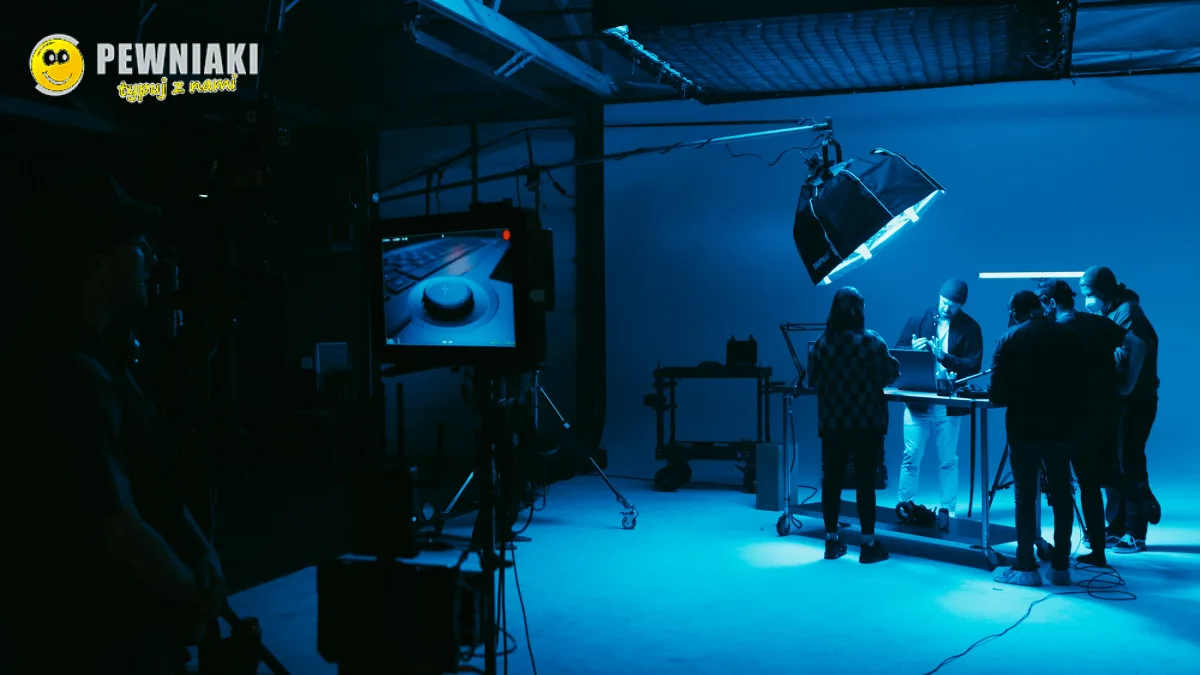
Most players only ever see the draw from the screen side: balls drop into the chute, the presenter reads out the numbers, and within a few minutes it's over. Behind that picture, though, stands a procedure whose whole purpose is to make the outcome impossible to predict or dispute. Below we describe its individual elements in turn: the equipment, the balls, the commission, the broadcast, and the final document.
The drawing machine — what it does and why it's built that way
The basic device is a drum or chamber in which the balls are set in motion — either mechanically or by an air stream. The balls circulate for a set amount of time and then leave the chamber one by one through an outlet sized to fit exactly one ball. The design deliberately has no component that could point to a specific number: there's no program here and no motor controlled by an operator.
The mixing runs longer than would be strictly needed just to eject a handful of balls. The longer the balls stay in motion, the weaker the influence their starting arrangement has on the result. This is the only method a mechanical device has for approaching a uniform distribution — it can't simply be declared, it can only be forced through mixing time.
The organiser usually has more than one machine and more than one set of balls at their disposal. The choice of which set to use before the draw is itself often a random element — the point is that even knowledge of minor differences within a single device shouldn't give anyone an advantage.
The balls: weight, diameter, and why they get weighed
The balls in a set must be practically identical. A difference in weight or diameter between the ball numbered 7 and the ball numbered 41 would translate into different behaviour in the air stream, and so into a different frequency of leaving the chamber. That's why sets are periodically weighed and measured, and balls that fall outside tolerance are withdrawn from use.
The same reasoning lies behind how the numbers are applied. Paint or printing adds weight, so the thickness of the layer has to be comparable across all the balls — a two-digit number can't weigh noticeably more than a single-digit one. It's a detail that looks like overkill, yet it's the only way to say that every number has the same probability.
It's worth understanding what all of this is for: equipment checks are there to guarantee that the result is random, not that it can be predicted. The distribution of past results says nothing about the next draw — each one is independent of those before it. Anyone wanting to look at the history of hits will find it in https://pewniaki.pl/en/lotto/statistics, but that's a record of the past, not a forecast.
The oversight commission — who's watching
The draw doesn't take place in the presence of technical staff alone. The process is overseen by a commission that checks the condition of the device and balls before the start, observes the course of the draw, notes down any disruptions, and confirms the result. It's the commission that decides whether a draw is considered valid or whether it has to be repeated.
Repeats are rare, but the procedure allows for them — for instance, if a ball gets stuck in the outlet, if the device stops halfway through, or if a number can't be read unambiguously. In such a case it's the wording of the rules and the commission's decision that count, not improvisation by the presenter on air.
The broadcast: what you see on screen, and what you don't
The broadcast from the studio is observational evidence, not legal evidence. The viewer is meant to see that the chamber is empty before loading, that the balls go into it in view of the camera, and that no one touches them while they're being mixed. The recording therefore serves as a public witness — it lets anyone check the process, but on its own it settles nothing.
The current draw and the broadcast schedule can be found in the https://pewniaki.pl/en/lotto-studio section. It's worth remembering, though, that the picture can be delayed by several seconds relative to the event in the studio, and that the presenter's reading is a message for the viewer — it isn't the formal announcement of the result.
The protocol — the only document that settles matters
Once the draw is over, the commission draws up a protocol: it records the numbers drawn, the date and time, the draw number, the equipment used, and any remarks about how it went. The document is signed by the commission's members. Only from that moment on is the result a result in the formal sense, and only on that basis is prize payment set in motion.
| Source of information | When available | Is it decisive |
|---|---|---|
| Live broadcast | during the draw | no |
| Results website, app | a few minutes after the draw | no |
| Commission's protocol | once finished and signed | yes |
| Terminal at a point of sale | once the result is confirmed | reading from the organiser's data |
The order matters when it comes to complaints: results websites, ours included, copy data from the organiser and may contain a mistake. In the event of a discrepancy, the protocol and the game rules are binding.
Why the result appears online with a delay
Between the reading on air and the numbers appearing in apps and results services, a few minutes usually pass. The result has to be confirmed on the organiser's side, entered into the system, and only then made available externally. The same goes for prize tiers and amounts — these require the hits from all coupons to be calculated, so they appear even later than the numbers themselves.
From a player's point of view, the conclusion is simple: it's worth checking a coupon's match once the data has entered the system, not during the broadcast. The quickest way to do that is via https://pewniaki.pl/en/check-coupon, but for an actual win it's still the terminal at the point of sale or the organiser's branch that has the final say.
Three things worth remembering
- Equipment control procedures exist so that the result is random, not so that it's predictable. There's no way to read anything about the next draw from them.
- The broadcast is observational evidence. The formal document is the commission's signed protocol, and it's this that wins in the event of a dispute.
- Every draw is independent of those before it. A number that hasn't come up for a long time is no closer to being drawn than any other.
Games of chance are intended only for adults (18+). The outcome of a draw is entirely random, and no method of play increases your chances of winning. This text is for informational purposes; the details of the drawing procedure and the complaints process are set out in the game rules and the organiser's documentation.
Tags: draw studio commission protocol drawing machines